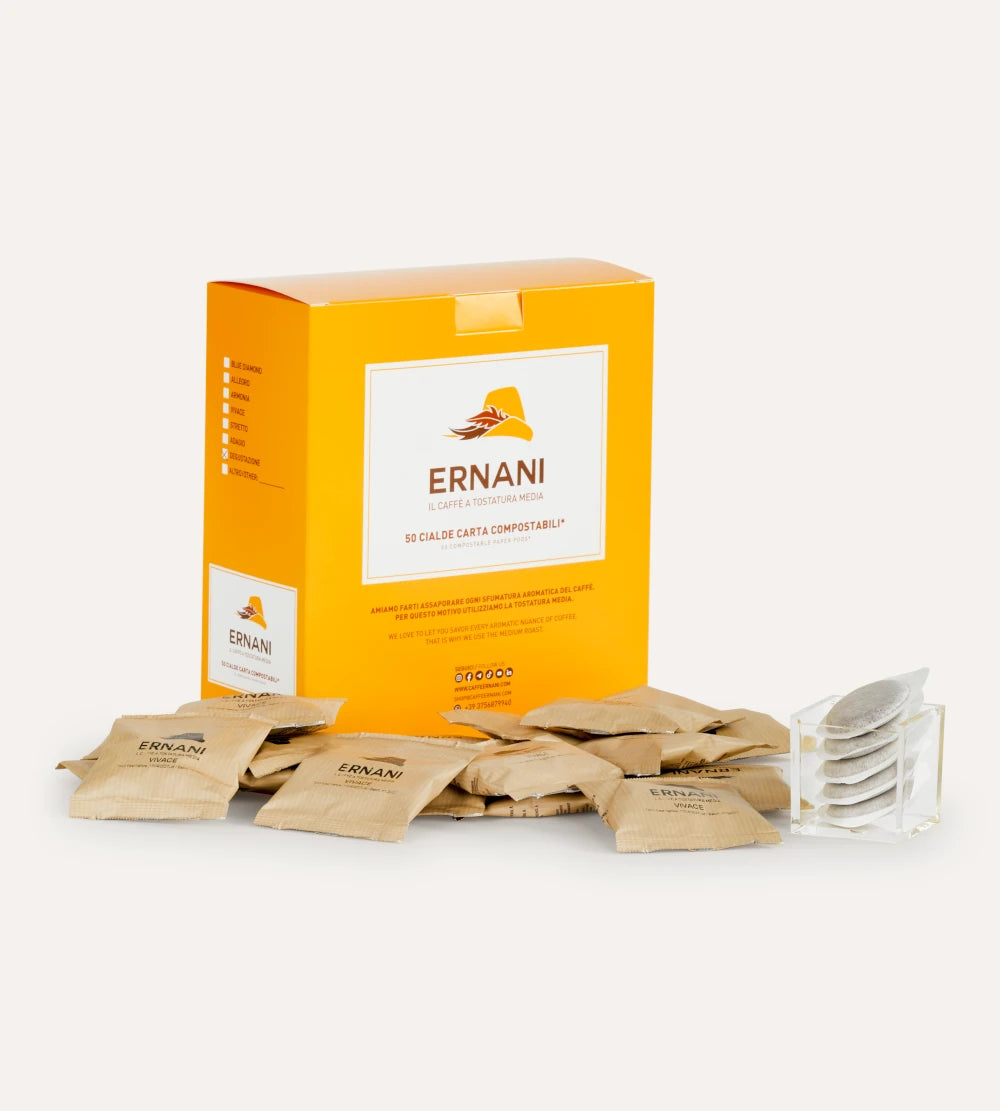
Brasile Bom Chocolate - 50 pods
Save up to 10% by choosing regular delivery


Decsription
Caffè delle Donne is a single-origin coffee from the Nossa Senhora das Gracas company in Brazil, in the Minas Gerais region, Alta Mogiana, in Ibiraci city, grown, harvested, and processed by a plantation that is a member of the IWCA, the International Women's Coffee Alliance.
Few people know this, but 70% of plantation workers are women. This is why IWCA Global was created: a global network that unites and supports the entrepreneurship of millions of women, operating in 34 countries, including Italy, the first European chapter.
Brazilian Santos Women's Coffee grows at an altitude of about 1,000 metres above sea level.
It is harvested with great care through picking (manual harvesting) and processed using the washed method, whereby the skin and pulp are removed and only the beans are placed in vats of clean water to ferment. After that, they are left to dry in the sun. This will bring greater freshness and aroma during extraction.
-
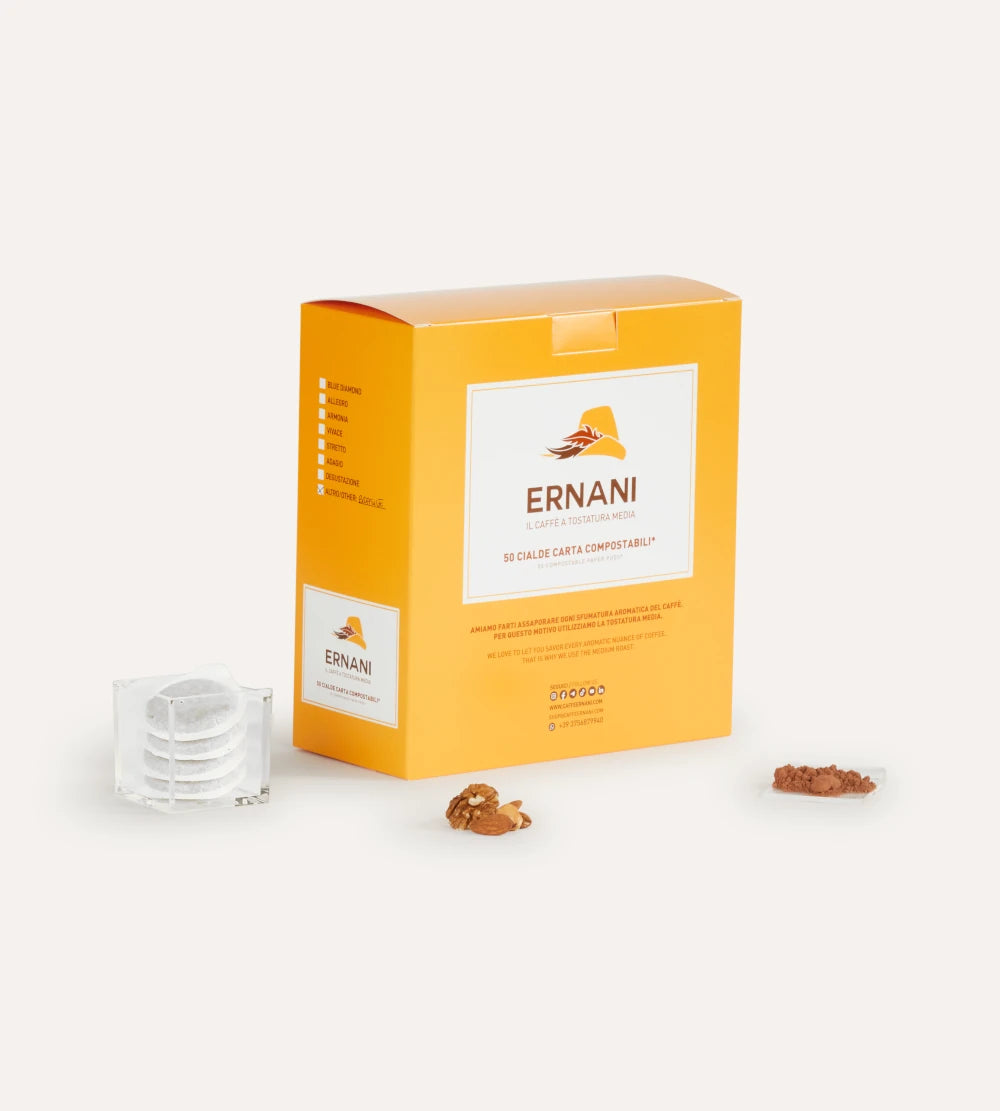
Nose: intensely aromatic with hints of almond and cocoa
-
Taste: sweet notes of almond and red fruit, balanced by a fresh and pleasant tartaric acidity reminiscent of pink grapefruit, together with the soft bitterness of hints of bitter cocoa and nuts.
Technical data sheet
- Aromatic notes: almond, red fruits, grapefruit and cocoa
- Intensity: 6/10Body: 5/9
- Sweetness: 4.5/9Bitterness: 4/9
- Acidity: 6/9
- Aromatic intensity: 6/9
- Roasting: medium
- Origins: Brazil
- Location: Fazenda Nossa Senhora das Gracas, Ibiraci city, Alta Mogiana, Minas Gerais
- Altitude: 1000m above sea level
- Harvest type: picking and stripping in the third phase
- Processing type: washed
- Variety: Arabica
- Expert rating: 84/100
Coffee History
Today we are travelling to Brazil, the world's leading producer and seller of coffee, which is why it is also one of the most widely consumed and well-known coffees!
Brazil has a multitude of plantations, both large ones stretching as far as the eye can see, which use industrial methods and produce poor quality coffee, and micro-plantations producing Speciality Coffee.
In short, the coffee-growing territory is vast and varied!
The arrival of coffee in the country
Coffee arrived in Brazil with European colonialism in 1727 in Parà, brought by Portuguese sergeant Francisco de Melo Palheta from French Guiana.
The soldier hid the plant in a bouquet of flowers given to him as a farewell gift by the wife of the governor of Guyana, who was in love with the Portuguese man.
This enabled him to plant the first coffee plant in Brazil! The two departments known for producing quality coffee are the Cerrado region, where our Bom Chocolate comes from, and the Minas Gerais region to the south-east of the former.
Cultivation began in the 1970s, thanks to farmers who sought out other regions outside the traditional ones, where annual frosts ruined the entire harvest.
Coffee-growing area
Minas Gerais was recognised as a coffee-growing area in 1970, when coffee became the most important agricultural product in the region, and in 2020 it was declared an IP, meaning it was recognised with the Indication of Origin label.
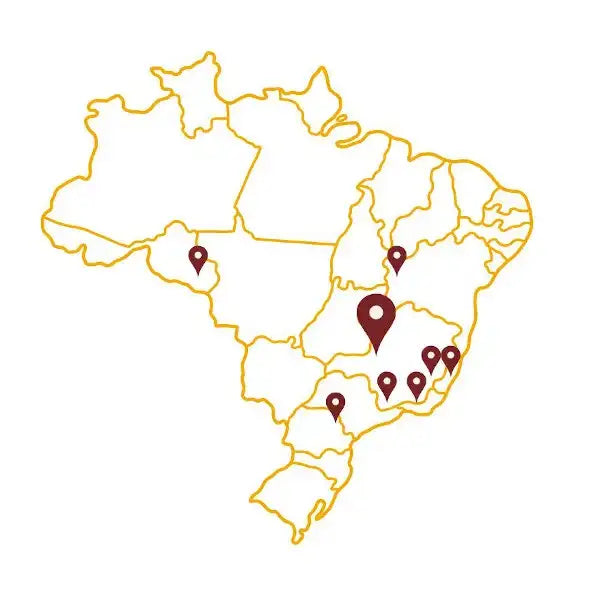
Coffee plants have intense and unique blooms, with uniform ripening of a concentrated harvest, which together with a perfect definition of the climatic seasons with hot and humid summers and mild and dry winters, create exceptional coffees.
Coffee from Minas Gerais, and more specifically from the Alta Mogiana area, has intense aromas, a caramel flavour with hints of dried and fresh fruit, a delicate citrus acidity and a predominant, very persistent chocolate flavour.
In this pleasant and idyllic landscape, until the 19th century, coffee was only used for domestic consumption, after which demand from the United States and Europe grew, thus encouraging the massive export of beans abroad.
Our Brazilian Women's Coffee comes from the Minas Gerais region, more precisely from the upper Mogiana area, near Ibiraci city, from an incredible state-of-the-art plantation: Nossa Senora das Gracas.
This coffee also comes from the IWCA (International Women in Coffee Alliance) circuit.
The owner of the plantation is Lais, a strong and determined woman who has created her own empire in the high-quality coffee sector.
She also founded Cocapil, a specialty cooperative that exports coffee globally.
Find out all about Lais and her innovative plantation.
From my trip to Brazil, I remember these vast lands, with a magical view of green hills and plateaus, contrasting with the clear sky.
Curiosity!
As already mentioned, Brazilian coffees are the best-selling in the world and the most widely used in Italian blends. There are some truly fine coffees, as well as poor quality beans full of defects. For this reason, saying ‘Brazilian’ coffee is very generic and has little meaning. It is necessary to learn more about the coffee in question, its origin, processing methods and roasting level!
As already mentioned, Brazilian coffees are the best-selling in the world and the most widely used in Italian blends. There are some truly fine coffees, but also some poor-quality beans full of defects. For this reason, saying ‘Brazilian coffee’ is very generic and has little meaning. It is necessary to learn more about the coffee in question, its origin, processing methods and roasting level!


Cos'è IWCA?
IWCA è l’acronimo di Alleanza Internazionale delle Donne nel Caffè, un’organizzazione apartitica ed inclusiva, la quale non considera sesso, religione o pensieri politici.
L’unico limite è la condivisione di un obiettivo finale comune: tutelare i diritti di ogni lavoratore e rafforzare il presidio delle donne nella comunità del caffè.
L’aspetto fondamentale è quindi il fatto che garantisca a chiunque la possibilità di svolgere una vita dignitosa, sostenibile e significativa.
Come in quasi tutti i settori infatti, i lavoratori più sfruttati e sottopagati sono coloro che stanno alla base, in questo caso quindi i contadini.
Essi non godono di un contratto stabile o di una paga minima, spesso senza tutela dei diritti basilari e senza un’abitazione salubre per sé e la loro famiglia, senza acqua o corrente elettrica.
Ma la donna si trova sul gradino ancora più basso.
IWCA si occupa proprio di individuare le situazioni più a rischio nel mondo e combatterle per tutelare i lavoratori.
Il tutto per incoraggiare e riconoscere la partecipazione femminile in tutti gli aspetti del settore, da sempre estremamente maschilista, oltre che aiutarle a condurre una vita migliore per sè, le loro famiglie e, di conseguenza, le loro comunità.
Esempi concreti possono essere: contratti di lavoro reali, paghe più alte e soprattutto adatte al costo della vita, un maggior rispetto e tutela dei loro diritti, la costruzione di asili interni alle piantagioni, dove poter lasciare i figli mentre si lavora o anche la possibilità di avere alloggi sani a prezzi vantaggiosi, o ancora la formazione gratuita in diversi ambiti, dall’imprenditorialità, all’indipendenza economica.
Inoltre…
Martina, la responsabile Marketing di Caffè ernani, è anche la Vice Presidente di IWCA Italia dal 2025. Con lei sono iniziati tanti nuovi progetti, come:
- Viaggi in piantagione
- “Cambia vita, Diventa barista”
- Social media dedicati
You may be interested in