


Femea | Brazil | Speciality Coffee | 250g
Or save up to 10% with regular delivery


Description
Femea — Speciality Coffee 100% Arabica | Brazil, Alta Mogiana | IWCA
One coffee, one origin, revealing its full character with every sip. Grown in Brazil's Alta Mogiana region, renowned for its high-quality coffee, on Lais's Nossa Senhora Das Graças farm. Hand-picked and washed-processed.
Sourced through IWCA Italia, the Italian chapter of the International Women's Coffee Alliance.
Tasting notes: sweet and harmonious, with notes of red berries, pink grapefruit, cocoa and nuts. Aromas of almond and cocoa.
Perfect for you if: you're looking for a clean, fresh, sweet coffee, and want your purchase to make a real difference to the women who grow it. Women do 70% of the work on coffee farms: this coffee recognises that value.
Why the IWCA project?
Women do 70% of the work on coffee farms, yet only 25% go on to run a business of their own, and many still lack protection and equal access to pay, education and finance. By buying this coffee, you help recognise their value in a tangible way, supporting IWCA projects that improve working conditions right from origin.
If you'd like to hear the growers' stories in person and visit their farms, a guided trip leaves from Italy every year.
Technical sheet
- Tasting notes: red berries, pink grapefruit and cocoa
- Body: 1/3
- Sweetness: 2/3
- Bitterness: 1/3
- Acidity: 2/3
- Roast: medium-light
- Origin: Brazil
- Location: Fazenda Nossa Senhora das Graças, Ibiraci, Alta Mogiana, Minas Gerais
- Altitude: 1000m above sea level
- Harvest: hand-picked
- Processing: washed
- Species: Arabica
- Speciality coffee score: 84/100
Thanks to our medium or medium-light roast, carefully selected green beans can truly shine, releasing all their natural aromas without ever tasting too bitter. Try it without sugar too – you'll be amazed!
The coffee is packed in a sealed bag fitted with a one-way valve, which lets the coffee degas while keeping out the oxygen that would oxidise it. This keeps your coffee fresh and aromatic for months.
Notes:
- Roasted as whole beans (then ground)
- 250g / 1000g net weight
Coffee Story
Brazil: the world's number one country for coffee production,
which is also why it's one of the most widely drunk and best-known coffees, among professionals and everyday drinkers alike.
The landscape is dominated by a multitude of farms: vast estates stretching as far as the eye can see, using industrial methods and producing low-quality coffee, alongside tiny speciality coffee micro-lots.
In short, its coffee lands are vast and varied!
P.S. Fancy visiting? Every year there's an escorted trip departing from Italy!
How it all began
Coffee arrived in Brazil with European colonialism in 1727, in Pará, brought from French Guiana by the Portuguese sergeant Francisco de Melo Palheta.
The soldier hid the plant in a bouquet of flowers given to him as a farewell gift by the governor's wife, who had fallen for the Portuguese officer.
Intensive cultivation, however, only began in the 1970s, thanks to growers who sought out new regions and so spread the popularity of this crop.
Until the 19th century, coffee was grown only for domestic consumption. Large-scale exports began only once demand from the United States and Europe grew.
Coffee-growing area
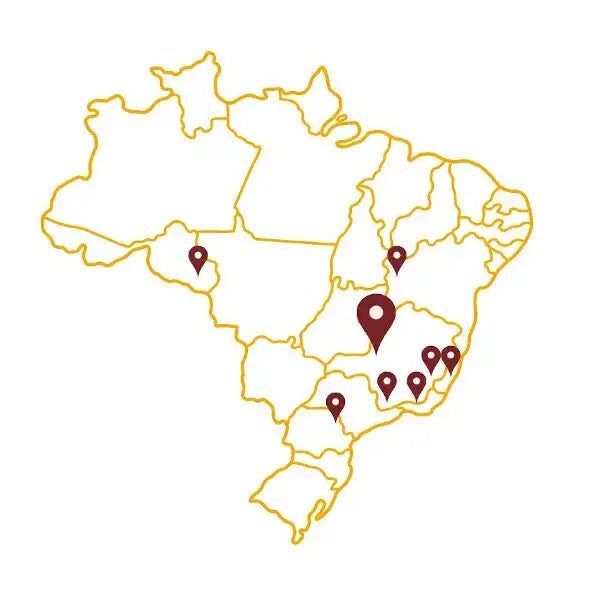
Coffee from Minas Gerais, and in particular from the Alta Mogiana area, has intense aromas, a caramel-like taste with hints of dried and fresh fruit, a delicate citrusy acidity and a dominant flavour of cocoa and nuts.
The plants here flower intensely and uniquely, ripening evenly for a concentrated harvest, thanks to the exceptional climate and clearly defined seasons, with hot, humid summers and mild, dry winters.
Did you know?
Brazilian coffees are the best-selling in the world and the most widely used in Italian blends – and they range from truly exceptional coffees to poor-quality beans full of defects.
That's why simply calling a coffee "Brazilian" is very vague and means little. It's worth digging deeper into where a coffee actually comes from!


What is the IWCA?
IWCA is the acronym for the International Women’s Coffee Alliance, a non-partisan and inclusive organisation that does not consider gender, religion, or political views.
The only requirement is a shared ultimate goal:to protect the rights of every worker and strengthen the role of women in the coffee community.
The fundamental principle is therefore to ensure that everyone has the opportunity to lead a dignified, sustainable, and meaningful life.
As in almost every sector, however, the most exploited and underpaid workers are those at the very bottom—in this case, the farmers.
They do not have stable contracts or a minimum wage, and are often left without protection of their basic rights or access to healthy housing for themselves and their families, as well as water or electricity.
But women are even further down the ladder.
IWCA works specifically to identify the most vulnerable situations worldwide and combat them to protect workers.
All this is done to encourage and recognise women’s participation in every aspect of the sector, which has always been extremely male-dominated, as well as to help them lead better lives for themselves, their families, and, consequently, their communities.
Concrete examples include: real employment contracts, higher wages—especially ones appropriate to the cost of living—greater respect for and protection of their rights, the construction of nurseries on plantations where they can leave their children while they work, or even access to healthy housing at affordable prices, as well as free training in various areas, from entrepreneurship to financial independence.
Furthermore…
Martina, Marketing Manager at Caffè Ernani, has also been the Vice President of IWCA Italy since 2025. Together, they have launched many new projects, such as:
- Plantation visits
- “Change Your Life, Become a Barista”
- Dedicated social media channels


