Colombia Finca la Meseta - 250g


Description
Coffee balanced between the acidity of citrus fruits and the sweetness of ripe fruit and nuts.
The single-origin Colombia Supremo Finca la Meseta is a gourmet Arabica coffee grown at an altitude of around 1,000 metres above sea level.
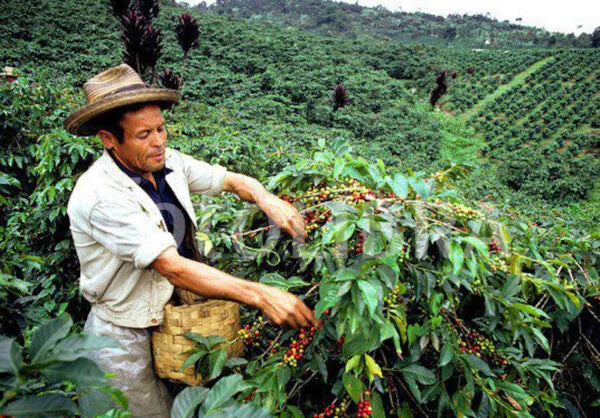
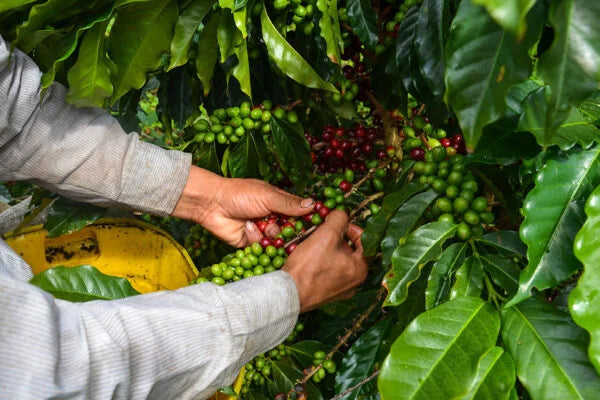
This small plantation, located in the Medellin region of Colombia, takes great care in every step of the process, from cultivation and harvesting to processing. The fruits are harvested using the picking method, which involves manually selecting only the cherries that are perfectly ripe.
They are then processed using the washed method, which gives the extracted coffee a fresh note.
- On the nose: releases aromas of cocoa and ripe fruit.
- Taste: the sweetness of plum and blackberry is immediately apparent, together with the intensity of chocolate. If left to cool slightly, the citric acidity reminiscent of lemon peel is enhanced.
Ernani's advice: for espresso, use a dose of 8.5 g per dose.
Technical data sheet
- Aromatic notes: ripe fruit and red berries, dark chocolate and hazelnuts, lemon
- Intensity: 6.5/9
- Body: 5/9
- Sweetness: 4/9
- Bitterness: 4/9
- Acidity: 6.5/9
- Aromatic intensity: 8/9
- Roasting: medium
- Suitable for: Those looking for a sweet, soft and fresh single origin, balanced by a light bitterness
- Origins: Colombia
- Location: Medellin Region, “Finca la Meseta” plantation
- Altitude: 1000m above sea level
- Harvest type: picking
- Type of processing: washed
- Variety: Arabica
- Expert rating: 78/100
History of coffee
Today we travel to Colombia, one of the most evocative coffee-growing regions in the world, so much so that its landscapes are a UNESCO World Heritage Site.
Coffee-growing areas
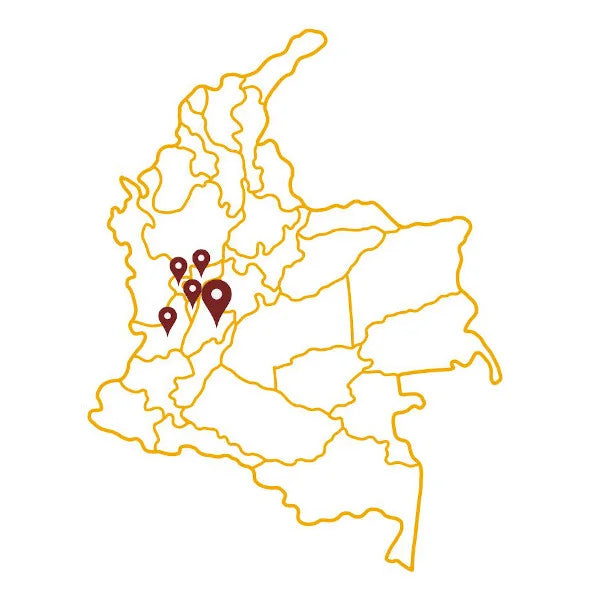
The coffee-growing areas are called Paisa or Eje Cafetero: rural areas that extend across several departments towards the south of the state, beyond Medellin. The best known are:
- Caldas
- Quindio
- Risaralda
- Tolima
- Cauca Valley
Arrival of coffee in Colombia
Eje Cafetero, with its perfect climate, was colonized by the Paisas in the 19th century, during the Colonización Antioqueña.
It reads:
"This is a cultural landscape that combines natural, economic, and cultural elements with a high degree of regional heterogeneity, making it an exceptional case in the world. This landscape combines the human, family, and generational efforts of coffee producers with the ongoing support of the institutions."
Here, life flows slowly, in contact with and respect for nature, made of simplicity and centuries-old cultural traditions.
Coffee has influenced the economy, lifestyle, traditions, habits and customs of the small historic villages of growers, who pass down knowledge and skills from father to son.
Initially, people rejected coffee because it takes about five years to produce the first fruitful harvest, but by 1999, revenues already accounted for 3.7% of GDP and 37% of agricultural employment.
Their traditional drink consists of a fabric filter extraction, in which the ground coffee undergoes several passes of hot water, to be served in a large, steaming cup.

Around the same time, marketing phrases like “Mountain Grown Coffee” emerged, and the constant promotion of 100% Colombian coffee helped Colombia stand out in the minds of consumers around the world.