Samay | India | Speciality Coffee | 250g | Subscription


Description
Samay — Speciality Coffee 100% Arabica | India
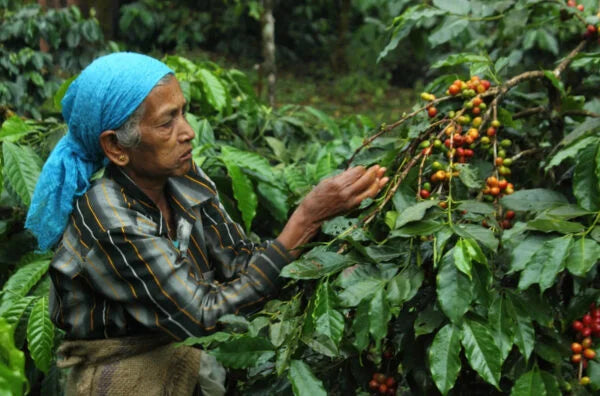
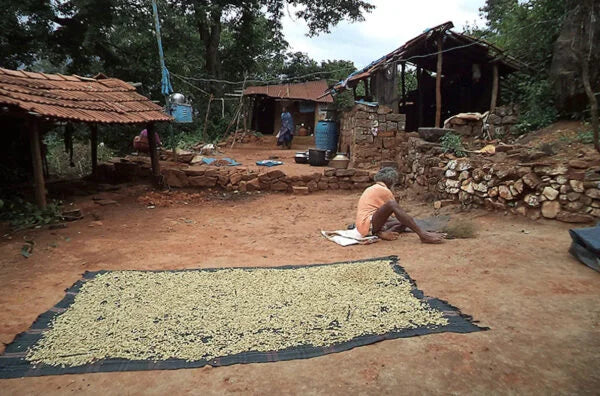
One coffee, one origin, revealing its full character with every sip. Grown in India at 1,000–1,450 metres above sea level by a fifth-generation family of growers. Hand-picked with double sorting, honey-processed. A true speciality coffee.
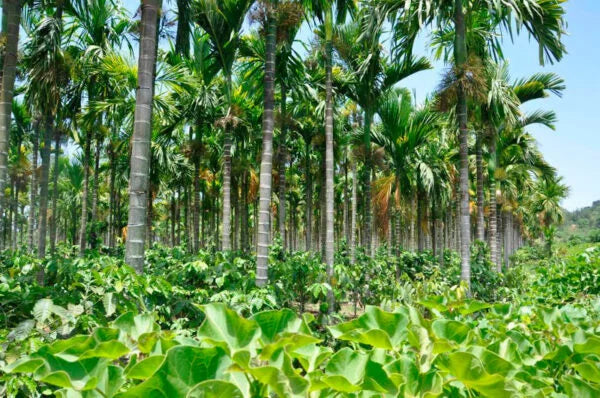
What makes this farm special is its incredible biodiversity: coffee grows alongside spice and fruit trees, helping to create a coffee rich in different aromatic notes.
Tasting notes: opens with almond, then red berries and tea with a soft acidity, unfolds into milk chocolate and tobacco, and finishes with vanilla. Almond and cocoa on the nose.
Perfect for you if: you love complex, aromatic coffees with a profile that changes with every sip and never stops surprising you.
Technical sheet
- Tasting notes: almonds, tea leaves, red berries, milk chocolate, tobacco and vanilla
- Body: 1.5/3
- Sweetness: 2/3
- Bitterness: 1/3
- Acidity: 2/3
- Roast: medium
- Origin: India
- Location: Karnataka region, Baba Budan Giri hills, Kalledevarapura estate
- Altitude: 1000–1450m above sea level
- Harvest: hand-picked
- Processing: semi-washed
- Species: Arabica
- Speciality coffee score: 82/100
Thanks to our medium or medium-light roast, carefully selected green beans can truly shine, releasing all their natural aromas without ever tasting too bitter. Try it without sugar too – you'll be amazed!
The coffee is packed in a sealed bag fitted with a one-way valve, which lets the coffee degas while keeping out the oxygen that would oxidise it. This keeps your coffee fresh and aromatic for months.
Notes:
- Roasted as whole beans (then ground)
- 250g / 1000g net weight
Coffee Story
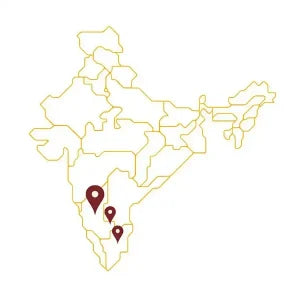
Our coffee is born in the Baba Budan Giri hills, below the Tropic of Cancer.
More specifically, we're in the Karnataka and Tamil Nadu region.
How coffee came to India
The legend of how the first green beans reached India is wonderfully colourful.
It is said that coffee first arrived in India in the 17th century, thanks to a Muslim holy man named Baba Budan. At the time, taking green beans out of Arabia – the sole grower and exporter – was illegal, precisely because of fears of competition from other countries.
So the holy man Baba Budan smuggled seven coffee beans out hidden in his beard. Other legends claim he swallowed the beans instead and then… well, retrieved them once he got home.
He carried the beans from Yemen to the Kingdom of Mysore, now part of Karnataka, where he planted them on a hillside – which is how the hills came by their current name, Baba Budan Giri.
Coffee growing was encouraged under British colonial rule.
After independence the sector grew in leaps and bounds. Even so, the market is made up of around 250,000 coffee growers, most of them small, local, family-run farms.
Coffee-growing regions
Coffee has traditionally been grown in the hills of the Western Ghats, later spreading to the southern states of Karnataka – where our Samay comes from – and Tamil Nadu.
These regions stay cool all year round and enjoy plentiful rainfall. The soil is deep and fertile. What makes this land special is its tall trees, which allow the coffee to be grown in the shade, sheltered from the strong direct sun.
These conditions create fertile ground for growing great coffee!
The plantations don't grow only coffee, but also pepper, cardamom, cinnamon, cloves, nutmeg and 45 other kinds of plants. This botanical diversity gives the beans a huge aromatic range and intensity of flavour.
The shade trees we've just mentioned are also vital for the local ecosystem, because they:
- prevent soil erosion
- return nutrients to the soil
- protect the coffee plants from the elements and provide a habitat for countless creatures in a beautiful biodiversity hotspot.
On the whole, Indian Arabicas offer lovely acidity and a creamy texture, with a wealth of aromas: from tea leaves to chocolate, from ripe stone fruit to red berries, from honey to nuts, spices and tobacco. In short, a riot of flavour.
Did you know?
Tasting this coffee is a rare treat: 80% of the harvest is bought by us here at Caffè Ernani, making it almost unique in the world!